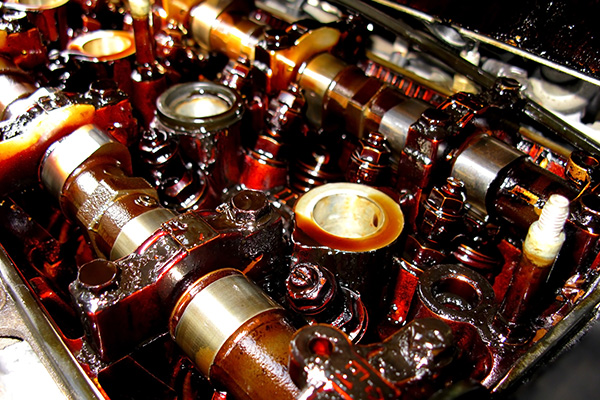
A car that only leaves the garage on weekends hardly adds miles, so it's tempting to leave the same engine oil in place for years. The dipstick might still show the correct level, and the engine sounds fine during the occasional drive. But oil maintenance isn't measured by mileage alone. For a rarely driven car, oil condition depends on age, moisture, fuel contamination, storage conditions, and the manufacturer's time limit.
Why Engine Oil Ages Even When You Rarely Drive
Engine oil doesn't collect the same amount of wear material when the engine is parked as it does during daily operation. That doesn't mean it stays in perfect condition indefinitely. Repeated short runs introduce moisture and small amounts of fuel into the crankcase, while temperature changes influence condensation. Over time, contamination and additive condition affect how well the oil protects the engine.
The important distinction is between a car that sits untouched for months and one that starts frequently for a few minutes without reaching full temperature.
Both have maintenance needs, but their oil experiences different operating conditions. The manufacturer's time limit applies even when the odometer has barely moved.
Time-Based Oil Change Intervals for Low-Mileage Vehicles
Many vehicles have both mileage and time limits for engine oil service, often expressed as whichever comes first. Some manufacturers specify annual service under certain conditions. Others use different intervals. The correct answer depends on the engine, oil approval, vehicle age, and how it is operated.
A car that accumulates only 2,000 miles in a year still needs to follow the applicable calendar schedule.
Oil-life monitors also vary. Some account for operating conditions and elapsed time, while others rely on different calculations. If you don't know when the oil was changed, check the records. Its color alone doesn't reveal its age or remaining protective properties.
Short Drives and Cold Starts Contaminate Engine Oil
When the engine starts cold, a small amount of moisture and fuel contamination can enter the crankcase during normal operation. Driving long enough for the oil to become thoroughly hot helps some of that contamination leave through the crankcase ventilation system. A five-minute trip may warm the coolant gauge without bringing the oil to the same temperature.
For a rarely driven car, repeated short trips are sometimes harder on oil than a longer drive covering more distance. Starting the engine only to idle for a few minutes in the driveway doesn't reliably solve that problem. The oil warms slowly, and the battery may not recover the energy used for starting. Normal, purposeful drives are better than a ritual of brief idling sessions.
Does Synthetic Oil Last Longer While the Car Is Parked?
Synthetic engine oils offer advantages in temperature performance and durability, but they aren't exempt from the vehicle's time-based maintenance limits. Synthetic isn't a substitute for the manufacturer's required oil approval. An oil approved for a particular engine is a better choice than an expensive product that doesn't meet its requirements.
Don't assume a darker dipstick reading means the oil is worn out. Some oils darken quickly while functioning properly. Likewise, clear-looking oil isn't proof that fuel or moisture contamination is absent. Service history and driving patterns give us a clearer picture. If oil smells strongly of fuel or the level rises unexpectedly, have the cause checked. Simply extending the change interval risks additional wear.
What Happens to Engine Oil During Long Vehicle Storage?
A vehicle parked for a season doesn't automatically need an immediate oil change every time it starts again.
Check how long the oil was in service before storage, whether the engine started briefly during storage, and the manufacturer's interval. Before extended storage, changing overdue or heavily contaminated oil is often sensible.
Keep records of these details:
- Date and mileage of the last oil change
- Oil specification and filter used
- Length of time the car has been parked
- Brief engine starts during storage
- Any changes in oil level or visible leaks
Oil isn't the only concern during storage. Before driving regularly again, check the battery charge, tire pressure, fuel condition, and brakes for corrosion.
Checking Engine Oil Before Driving a Stored Car
Before the first substantial drive, inspect the oil level using the procedure in the owner's manual.
Look under the car for leaks and inspect the oil filler cap and surrounding area for unusual deposits. A little condensation residue has several possible causes. Heavy sludge or signs of coolant mixing with the oil call for a shop inspection.
Use the correct oil and filter when service is due. Don't pour additives into old oil hoping to make overdue service unnecessary. If the vehicle has been parked for a very long period, other systems may need checks before you even start it. A maintenance appointment gives us an opportunity to inspect hoses, belts, tires, and brakes along with the oil service.
Why Low Mileage Doesn't Guarantee a Healthy Engine
Engines age with use, but they also depend on regular lubrication and sensible operating habits. Seals harden with time, batteries discharge while parked, and moisture can accumulate when a car only takes very short trips. A vehicle with 3,000 miles of short errands isn't experiencing the same conditions as one with 3,000 miles of steady highway driving.
That difference is why severe-service schedules sometimes apply to low-mileage cars. We ask about the actual trips the vehicle makes and how long it remains parked between them.
For a rarely driven car, put the next oil change date on the calendar. Waiting for another few thousand miles might mean waiting years.
Get Low-Mileage Oil Change Service in Alexandria, VA, With Yates Automotive
Yates Automotive in Alexandria, VA, checks oil service history, engine condition, and the maintenance requirements of vehicles that spend much of their time parked. We'll help you follow the correct time and mileage interval instead of guessing from the dipstick.
Put the last oil change date on your calendar. For a rarely driven car, the service date is often a better reminder than another thousand miles on the odometer.