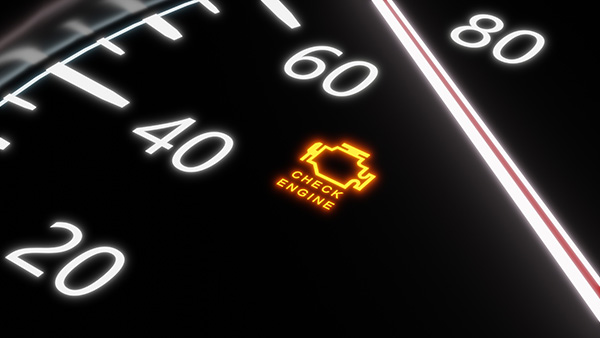
The check engine light has a way of making you nervous, then confusing you. It comes on during a normal drive, you start thinking worst-case, and then the next day it’s gone. A lot of drivers assume that means the problem fixed itself. Sometimes that’s true, but more often it means the car stopped seeing the issue for the moment.
The real question is why it turned on in the first place and whether the conditions that triggered it are likely to recur.
Why The Light Can Turn Off By Itself
Most check engine lights are triggered when the engine computer sees a fault more than once, or for long enough to count as a real event. If the condition stops happening, the system may turn the light off after a certain number of drive cycles. The key detail is that the light can go off while the fault is still stored in memory.
Intermittent problems are the most common reason this happens. A loose connection, a sensor signal that glitches under heat, or a small leak that only shows up under specific conditions can set the light, then behave normally later. The car is not declaring it fixed, it’s simply reporting what it is seeing right now.
What That Light Was Watching When It Came On
The computer isn’t watching one single part. It’s watching how the engine runs as a system. It looks at mixture control, misfires, emissions-related leaks, airflow readings, catalyst efficiency, and a long list of sensor inputs that should agree with each other.
When something doesn’t match expectations, the computer sets a code and may turn the light on. That code is basically a clue about what it noticed, not a guaranteed parts list. That’s why a light that comes and goes still deserves attention, because the stored information can point toward the condition that caused it.
Common Situations Where It Really Can Clear Up
There are a few scenarios where a check engine light might come on briefly, then stay off for a long time.
A loose or worn gas cap is a classic one. If the EVAP system sees a leak, it may set a code, then later pass its self-check after the cap is tightened properly. Another situation is moisture or temperature swings that temporarily affect a sensor reading or connector contact. You can also see a brief light after fueling if the EVAP system detects an odd pressure change, then it resolves on the next self-test.
Even in these cases, it’s still useful to check what code set, because it confirms whether you’re dealing with something simple or something that tends to return.
Why It May Come Back At The Worst Time
Intermittent faults love to return when conditions line up again. Heat is a big trigger. So is load, like climbing a long grade or accelerating onto the highway. Some issues show up only at idle, others only when the engine is working harder.
That’s why it helps to think back to the moment the light came on. If it happened during heavy acceleration, after a hot restart, or during a long cruise, that context can point you toward certain systems. When we can reproduce the conditions, testing gets faster, and the fix is more likely to be correct the first time.
Clues Worth Noting If The Light Comes And Goes
If the light turns off, it’s tempting to forget it ever happened. But a few quick notes can make a big difference if it returns.
Pay attention to how the car felt when it was on. Was idle slightly rough, did it hesitate, did fuel economy drop, did it smell unusual, did it run hotter than normal. Also note whether it happened right after fueling or after a long drive. We’ve seen plenty of cases where that one detail was the thing that pointed straight to the cause.
Owner Mistakes That Make Intermittent Issues Harder To Catch
The most common mistake is clearing codes the moment the light appears. That can erase stored data that helps narrow down the conditions that triggered the fault. Another mistake is replacing the first part mentioned by a generic code description, because many codes describe what the computer noticed, not what failed.
Ignoring a flashing check engine light is the costly one. Flashing usually indicates an active misfire, which can damage the catalytic converter if you keep driving it hard. Even if the flashing stops later, the event still deserves a proper look.
A Practical Decision Guide For What To Do Next
If the check engine light is flashing, or the engine is shaking or down on power, reduce driving and schedule service quickly. If the light is steady and the car feels normal, you can usually drive short distances, but it’s still smart to schedule engine diagnostics soon so you’re not guessing. If the light has turned off, you’re not in the clear, but you may have a better chance of catching the truth while the stored code and data are still available.
In other words, treat a disappearing light as a warning you got lucky with, not proof the issue is gone for good.
Get Check Engine Light Diagnostics in Alexandria, VA with Yates Automotive
If your check engine light came on and went away, we can run engine diagnostics, pull the stored information, and test the system involved so you’re not replacing parts blindly. We’ll explain what the results show and what should be handled now versus what can be watched.
Book your service at Yates Automotive in Alexandria, VA, and we’ll help you get the light figured out for the right reason.